Olivia Hayes · 26 October 2026
How International Shipping Regulations Shape the Marketplace for Unusual Historical Items
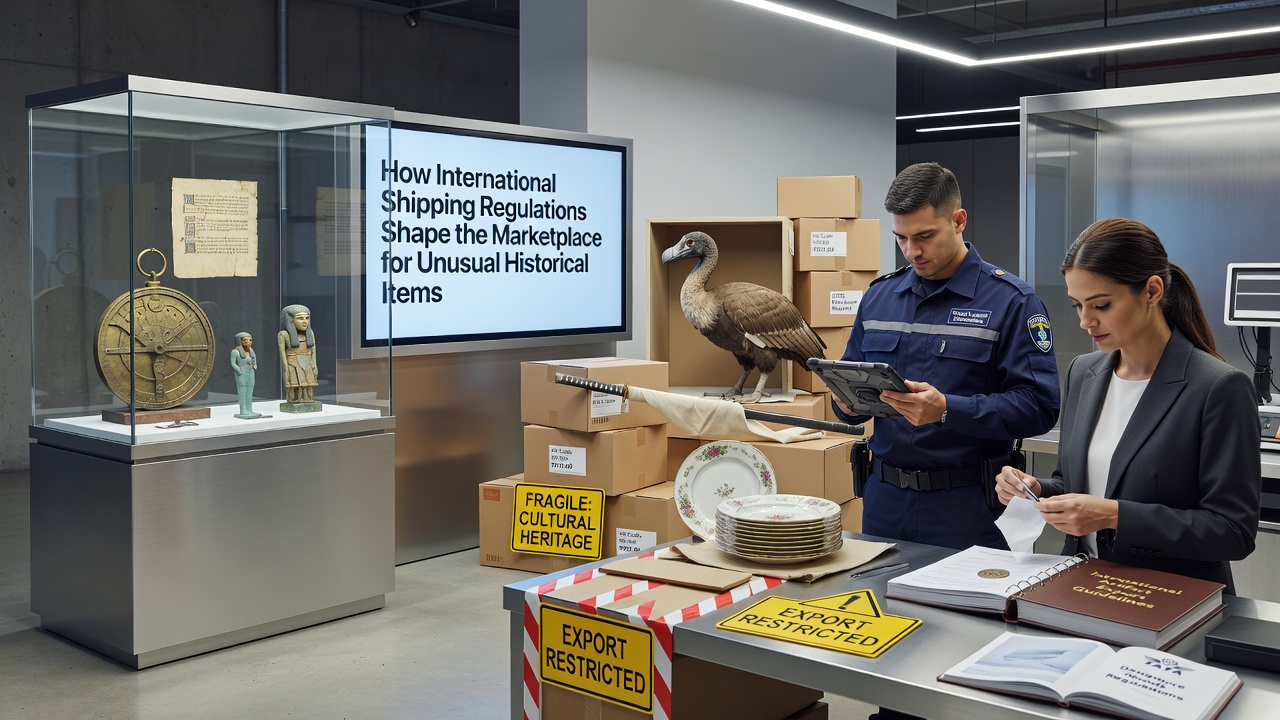
International shipping regulations determine which unusual historical items can cross borders and reach buyers in distant markets. These rules cover cultural property protections, endangered species materials embedded in artifacts, and customs documentation requirements that vary by country. Observers note that dealers in rare relics often encounter delays or outright refusals when attempting to export objects like ancient pottery or tribal carvings because origin countries enforce strict export controls under treaties such as the 1970 UNESCO Convention.
Core Regulatory Frameworks Governing Artifact Movement
Multiple overlapping agreements set the baseline for what moves legally. The UNESCO Convention on the Means of Prohibiting and Preventing the Illicit Import, Export and Transfer of Ownership of Cultural Property requires signatory nations to return stolen or illegally exported items, and this creates paperwork hurdles for anyone shipping pre-1970 artifacts. CITES listings further restrict objects containing ivory, tortoiseshell, or certain hardwoods, forcing sellers to obtain permits that can take months to secure. Data from border agencies shows that shipments containing mixed materials face the highest scrutiny rates because inspectors must verify compliance with both cultural and wildlife rules simultaneously.
National Implementation Creates Uneven Market Access
Countries apply these treaties differently and the resulting patchwork directly influences where collectors can source items. The United States enforces the Convention on Cultural Property Implementation Act through the Department of State and Customs and Border Protection, requiring specific import licenses for designated categories from partner nations. Australia maintains its own Protection of Movable Cultural Heritage Act that blocks export of significant Aboriginal artifacts without government approval. European Union member states coordinate through a single regulation on the import of cultural goods, yet individual nations still impose additional checks that slow intra-EU transfers of historical pieces. Sellers report that these layered requirements push transactions toward jurisdictions with clearer processes while shrinking volumes in stricter regions.
Practical Effects on Sellers and Buyers
Marketplace platforms hosting unusual historical items must navigate these constraints daily. Listings for items like Mesoamerican stone carvings or 19th-century ethnographic masks often include disclaimers about shipping restrictions because carriers refuse packages lacking the correct permits. Research from trade monitoring groups indicates that compliance costs now represent a larger share of transaction value than in previous decades, particularly for objects valued under a few thousand dollars. Buyers in one region may find themselves unable to receive purchases from another because the seller cannot clear export controls, and this fragments liquidity in niche segments. Some dealers have shifted toward domestic-only sales or digital replicas to avoid the regulatory friction entirely.

Enforcement Trends and Documentation Demands
Customs agencies worldwide have increased use of digital tracking systems and risk-based inspections. The European Union’s Import Control System 2, rolled out progressively, requires advance cargo information that flags high-risk cultural shipments for examination. Similar programs in Canada and Japan demand detailed provenance records before clearance. Those who have studied enforcement patterns note that incomplete paperwork triggers the majority of holds, while outright seizures remain concentrated on objects with obvious red flags such as fresh excavation soil or mismatched origin claims. Auction houses and specialized dealers now invest in third-party authentication services to generate the supporting files needed for smoother transit.
Developments Scheduled for October 2026
October 2026 brings scheduled updates to several international instruments that will alter compliance requirements for certain artifact categories. Amendments to CITES appendices are expected to reclassify additional species used in historical carvings, while the UNESCO framework continues its periodic review of national reporting standards. Trade data compiled by the World Customs Organization suggests that preparation for these changes has already prompted some marketplaces to adjust listing policies and shipping partners in advance. Participants in the sector watch these timelines closely because even modest shifts in permit thresholds can redirect entire categories of items away from cross-border trade.
Conclusion
International shipping regulations continue to define the boundaries of the marketplace for unusual historical items through permit systems, material restrictions, and enforcement mechanisms that differ by jurisdiction. Sellers adapt by documenting provenance more rigorously and selecting routes with predictable clearance processes, while buyers encounter varying availability depending on origin and destination rules. As amendments take effect in October 2026 and digital tracking expands, the administrative landscape will keep evolving, yet the core dynamic remains unchanged: only items that satisfy every layer of regulation reach their intended markets.