Gisela Lange · 14 September 2026
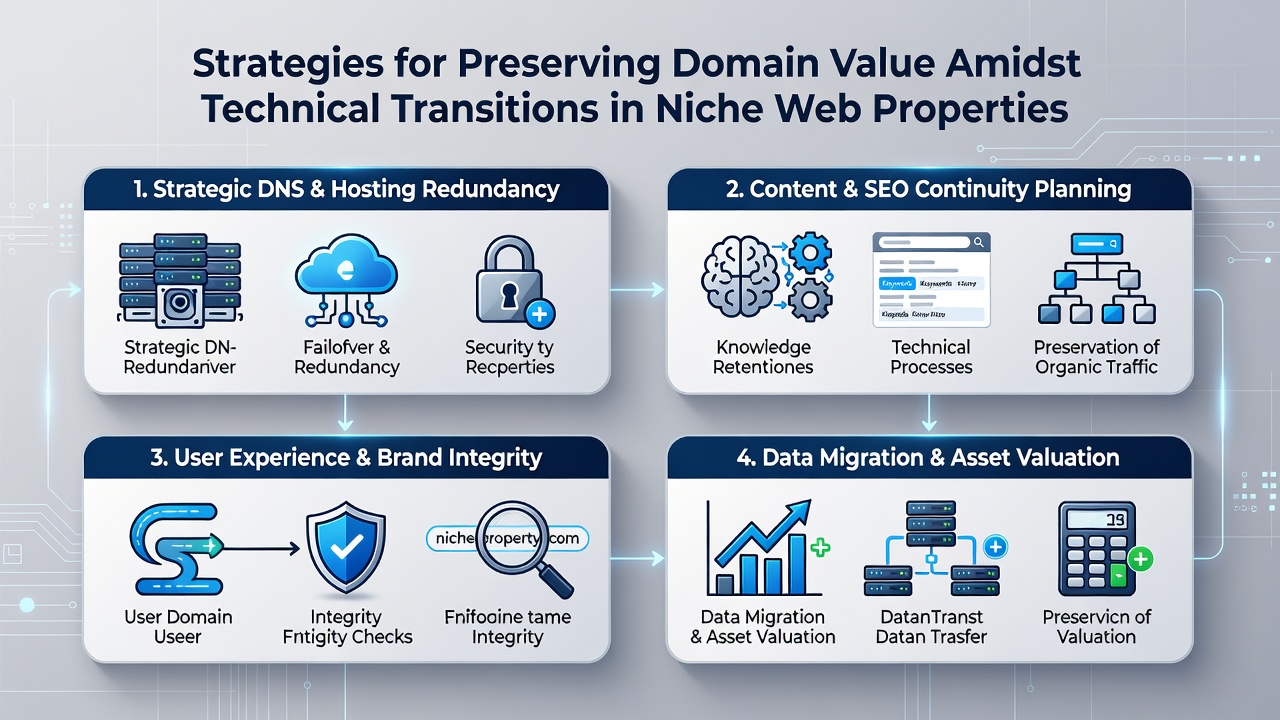
Strategies for Preserving Domain Value Amidst Technical Transitions in Niche Web Properties
Technical transitions in niche web properties often involve DNS updates, content management system migrations, server relocations, or protocol shifts that can affect domain metrics such as authority signals, traffic patterns, and backlink integrity. Observers note that these changes require coordinated preparation because even minor configuration errors can lead to indexing delays or reduced crawl frequency by search engines.
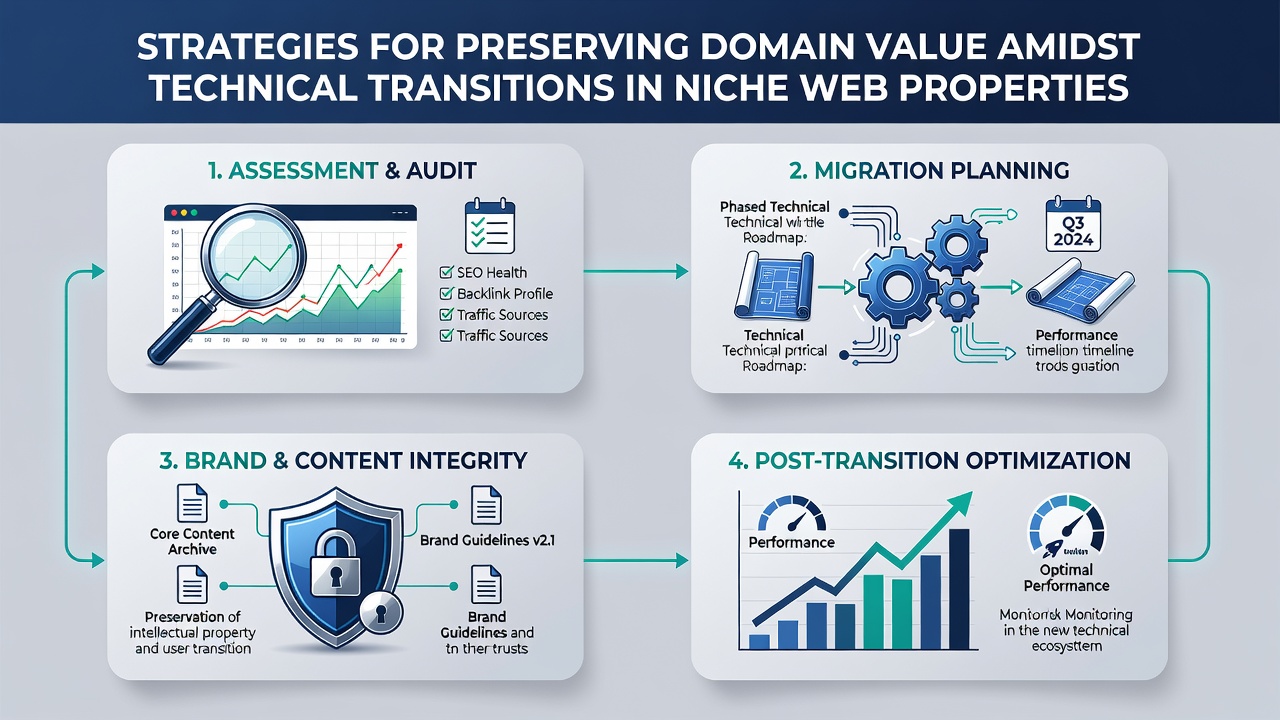
Assessing Current Domain Metrics Before Any Shift
Those who manage niche sites typically begin by compiling baseline data on organic traffic sources, referring domains, and crawl statistics through established analytics platforms. Research indicates that properties with detailed historical records recover faster when teams document average daily visits, top landing pages, and existing redirect chains prior to initiating changes. Data from studies conducted across multiple regions shows that sites lacking such records experience longer periods of volatility in search visibility after transitions.
Experts have observed that September 2026 brought heightened attention to these practices following reports of widespread protocol updates affecting smaller domains. Figures reveal that properties which audited their DNS records and server configurations in advance maintained steadier referral traffic compared with those that addressed issues reactively.
Developing a Phased Implementation Timeline
Planning documents from industry reports emphasize creating staged rollouts that separate DNS modifications from content migrations whenever possible. Teams often test individual components on staging environments first, which allows verification of SSL certificate chains, canonical tag consistency, and internal link structures before live deployment. This approach reduces the chance that simultaneous alterations compound indexing problems.
According to guidance published by teh National Institute of Standards and Technology, systematic testing protocols help organizations identify configuration conflicts early. Niche web properties that adopted similar checklists preserved more of their historical domain signals because they avoided bulk changes that overwhelm monitoring tools.
Executing Changes with Redundancy Measures
During actual transitions, administrators frequently maintain parallel hosting environments for a defined overlap period. This setup enables immediate rollback if new configurations produce unexpected errors in robots.txt directives or sitemap generation. Observers note that keeping legacy IP addresses active until propagation completes prevents abrupt drops in availability for users in different geographic zones.
Redirect mapping receives particular focus because comprehensive 301 implementations protect accumulated link equity across niche topics. Research indicates that properties which audit every URL variation before launch experience fewer instances of duplicate content flags. Those who've studied this process know that automated tools combined with manual spot checks catch edge cases that scripts alone might miss.
Post-Transition Monitoring and Adjustment Protocols
After changes go live, continuous tracking of server response codes, index coverage reports, and referral patterns becomes essential. Data shows that early detection of crawl errors allows teams to submit updated sitemaps and request reindexing through webmaster consoles without extended delays. European Commission analyses of digital infrastructure transitions highlight how consistent monitoring correlates with quicker restoration of pre-change traffic levels.
Teams also review backlink profiles for any new patterns that might indicate temporary devaluation signals. Properties that cross-reference these metrics against historical baselines can prioritize fixes for high-value pages first, thereby limiting broader impact on overall domain valuation.
Conclusion
Technical transitions in niche web properties succeed when operators combine thorough pre-assessment, staged execution, and sustained monitoring. Evidence from multiple regulatory and research sources demonstrates that these coordinated steps help maintain continuity in traffic, authority metrics, and external references throughout the process. Organizations that integrate such frameworks report more predictable outcomes when updates become necessary.